
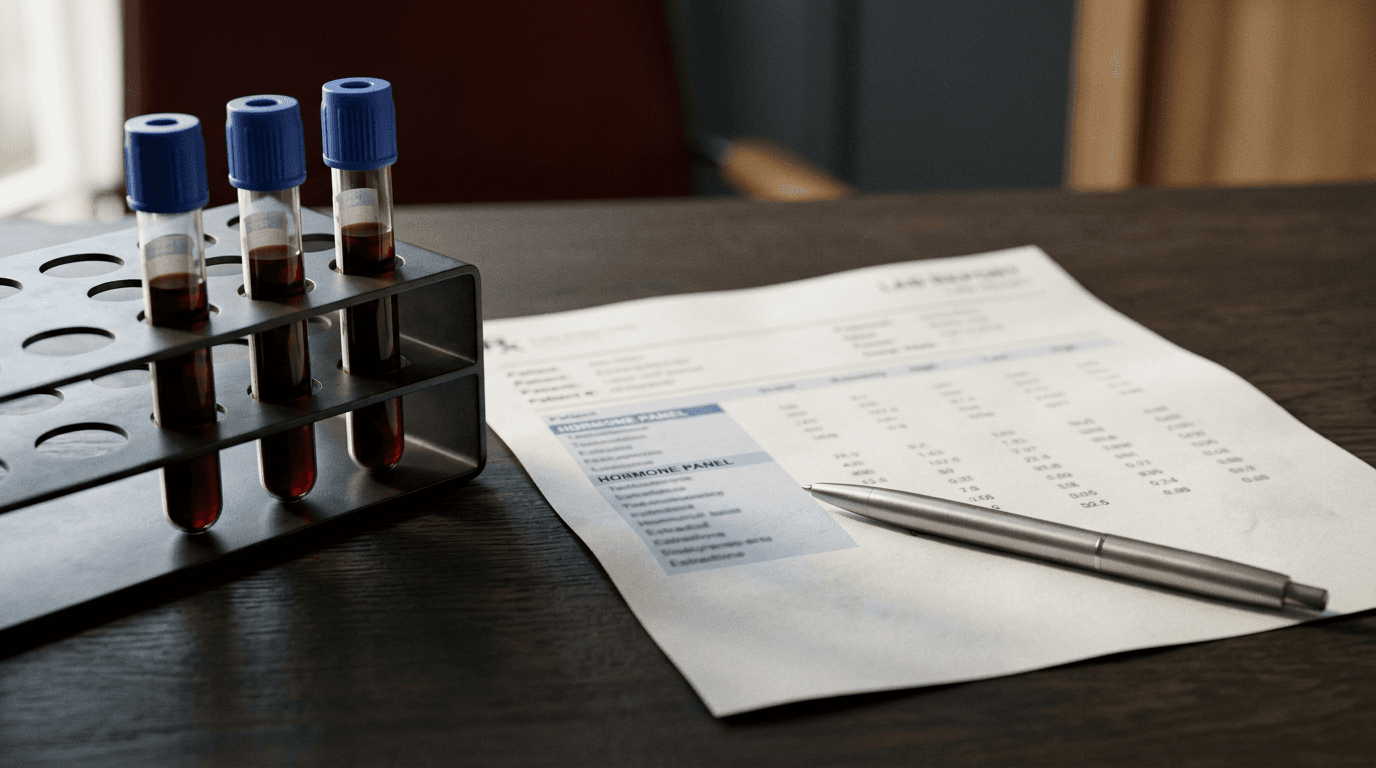
Not every tired month means TRT. The right call comes from two morning testosterone draws, symptom quality, and the metabolic context that can mimic low T. Here's when treatment is justified, when correction of sleep and insulin resistance should come first, and what monitoring keeps therapy safe.[1]
Diagnosis before treatment
A single testosterone result is not enough. We require two early-morning values plus symptom correlation before calling true deficiency. SHBG and free testosterone often explain why one person at 420 ng/dL feels symptomatic while another does not.[3]
LH, FSH, prolactin, CBC, CMP, and thyroid markers define whether the picture is primary hypogonadism, secondary suppression, or a non-androgen issue. Skip these and therapy becomes guesswork.
When TRT is the right move
Treatment is most defensible when low values are persistent and symptoms are function-limiting: low libido, reduced recovery, morning fatigue, and declining training capacity despite adequate sleep and nutrition.[3]
It is less defensible when insomnia, obesity, alcohol load, or sleep apnea are still unaddressed. Those can depress testosterone and will continue to do so even if an injection starts.
How monitoring prevents avoidable harm
First retest usually lands around week 6-8, then quarterly once stable. CBC and estradiol trends matter as much as symptom gains because erythrocytosis and over-dosing are common failure modes.
The best protocol is the lowest effective dose that improves symptoms without pushing hematocrit or side-effect burden into red zones.